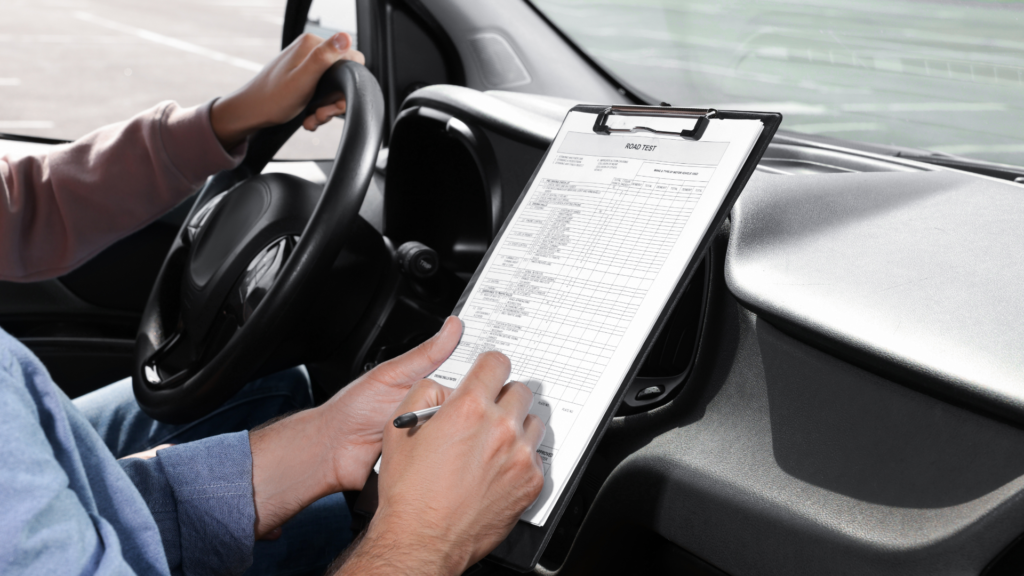
The driving test is a key milestone in the journey toward earning your driver’s license. Whether you’re taking the test for the first time or retaking it after some time, it’s natural to feel nervous. However, understanding the types of questions you might be asked can help you prepare and boost your confidence on test day.
Driving tests typically include both a practical road test and a theoretical written exam. In this blog post, we’ll cover some of the common questions asked during both parts of the driving test, so you know exactly what to expect.
Theoretical Questions: Knowledge of Road Rules and Safety
Before you can hit the road, you’ll need to prove your understanding of traffic laws, road signs, and basic driving knowledge. The theoretical portion of the driving test focuses on assessing your knowledge of the rules of the road. Here are some common questions you might encounter:
1. What does this road sign mean?
You’ll likely be asked to identify and explain the meaning of various road signs. This includes regulatory signs (like stop signs and speed limits), warning signs (such as slippery road or sharp turn signs), and informational signs (like direction signs).
2. What should you do when you see a school zone sign?
School zones require special attention, as they have lower speed limits to ensure the safety of children. You might be asked about what actions are necessary when approaching a school zone, such as reducing speed and being alert for pedestrians.
3. When should you use your turn signals?
Turn signals are essential for communication on the road. Expect questions that test your knowledge on when to signal before turning, changing lanes, or entering and exiting roundabouts. Understanding when and how to use your signals is crucial for safe driving.
4. What is the proper way to yield the right of way?
Yielding the right of way can be a tricky concept for many new drivers. You may be asked about specific scenarios, such as when entering an intersection, merging onto highways, or dealing with pedestrians. Be sure to familiarize yourself with these rules to avoid mistakes.
5. What are the consequences of driving under the influence?
You’ll be asked about the risks and consequences of impaired driving. This includes understanding the dangers of driving under the influence of alcohol or drugs, and the legal consequences that come with it.
Practical Questions: Demonstrating Safe Driving Skills
Once you’ve passed the theoretical portion, the practical road test begins. During the practical exam, you’ll be asked to perform a series of maneuvers to demonstrate your driving skills. While the examiner won’t ask you specific questions verbally, you should be prepared to follow their instructions carefully and perform certain tasks. Here are some common maneuvers you might be asked to perform:
1. Parallel Parking
Parallel parking is often one of the most dreaded parts of the driving test. You will likely be asked to park your vehicle between two markers or cones, demonstrating your ability to maneuver your vehicle in tight spaces. Be sure to check your mirrors, use your turn signals, and go slowly to ensure you park within the lines.
2. Three-Point Turn
A three-point turn is required when you need to change direction on a narrow road. During the test, you’ll be asked to make a turn while checking for traffic, signaling, and using your mirrors effectively. Make sure you execute the turn smoothly without crossing into oncoming traffic.
3. Stopping at a Stop Sign
You’ll be asked to approach a stop sign and demonstrate that you know the proper procedure for stopping, which includes coming to a complete stop and checking for pedestrians or oncoming traffic before proceeding.
4. Changing Lanes
Expect to be tested on your ability to change lanes safely. You will be asked to demonstrate how to signal, check your mirrors and blind spots, and smoothly merge into the next lane. Make sure you follow traffic rules and avoid abrupt movements.
5. Driving in Traffic
Your examiner will likely want to observe how you drive in different traffic conditions, including obeying traffic signals, keeping a safe following distance, and managing speed. Be prepared to drive in a variety of conditions to demonstrate your ability to adapt to different road situations.
Tips for Passing Your Driving Test
To increase your chances of passing the driving test on the first try, here are some helpful tips:
- Practice regularly: The more time you spend behind the wheel, the more confident you’ll feel. Practice all aspects of driving, including parking, lane changes, and highway driving.
- Know the rules: Study your local driving manual thoroughly, paying attention to road signs, traffic laws, and safe driving practices.
- Stay calm: It’s normal to feel nervous, but staying calm and focused during the test will help you think clearly and perform your best.
- Listen carefully: Pay attention to the examiner’s instructions, and don’t be afraid to ask for clarification if you don’t understand something.
Conclusion
The driving test can be intimidating, but with the right preparation, you can approach it with confidence. By understanding the common theoretical and practical questions asked during the test, you’ll be ready to demonstrate both your knowledge of the rules of the road and your ability to drive safely.
Remember, every driving test is an opportunity to prove that you’re ready for the responsibility of being a safe and confident driver. Good luck, and drive safely!